
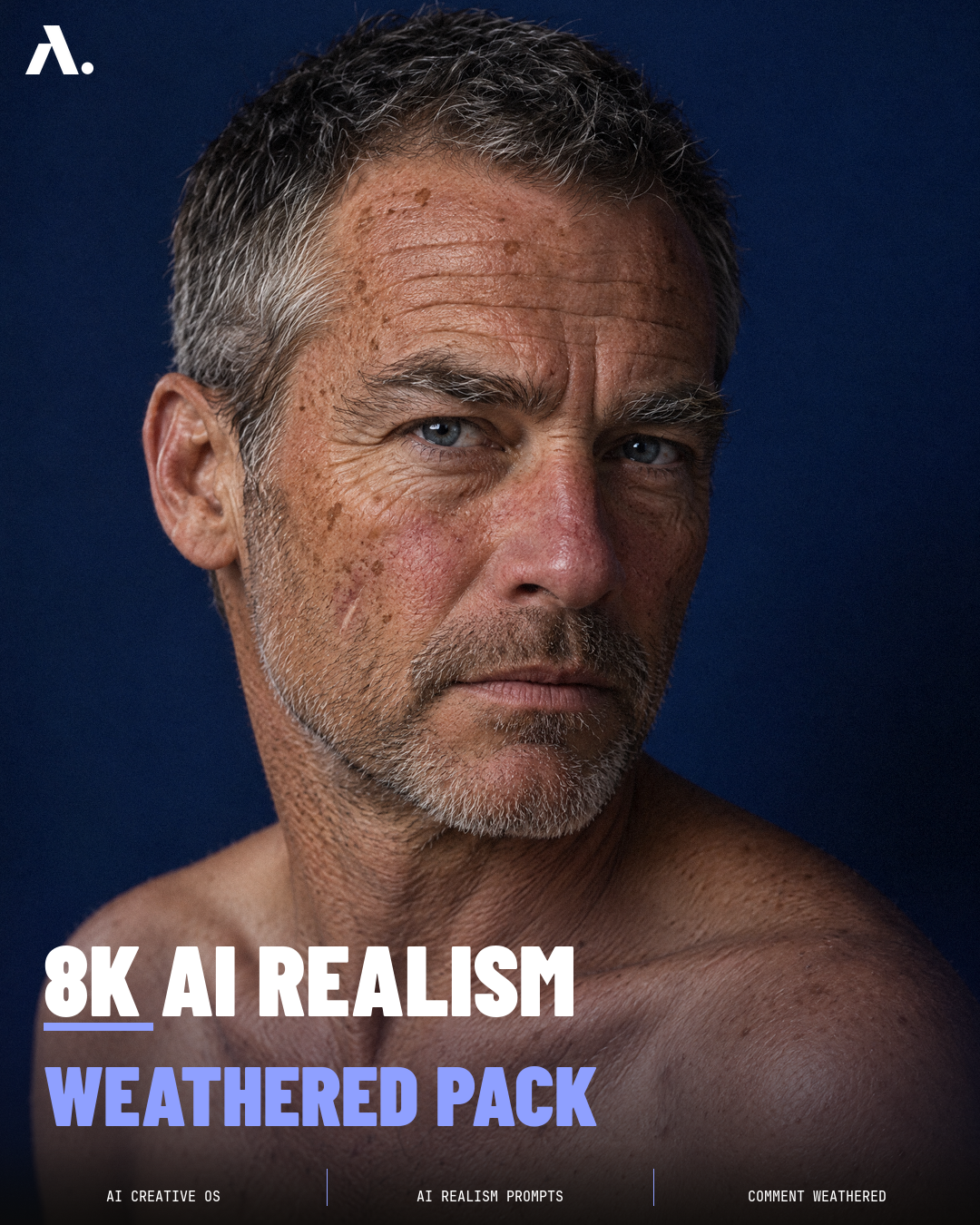
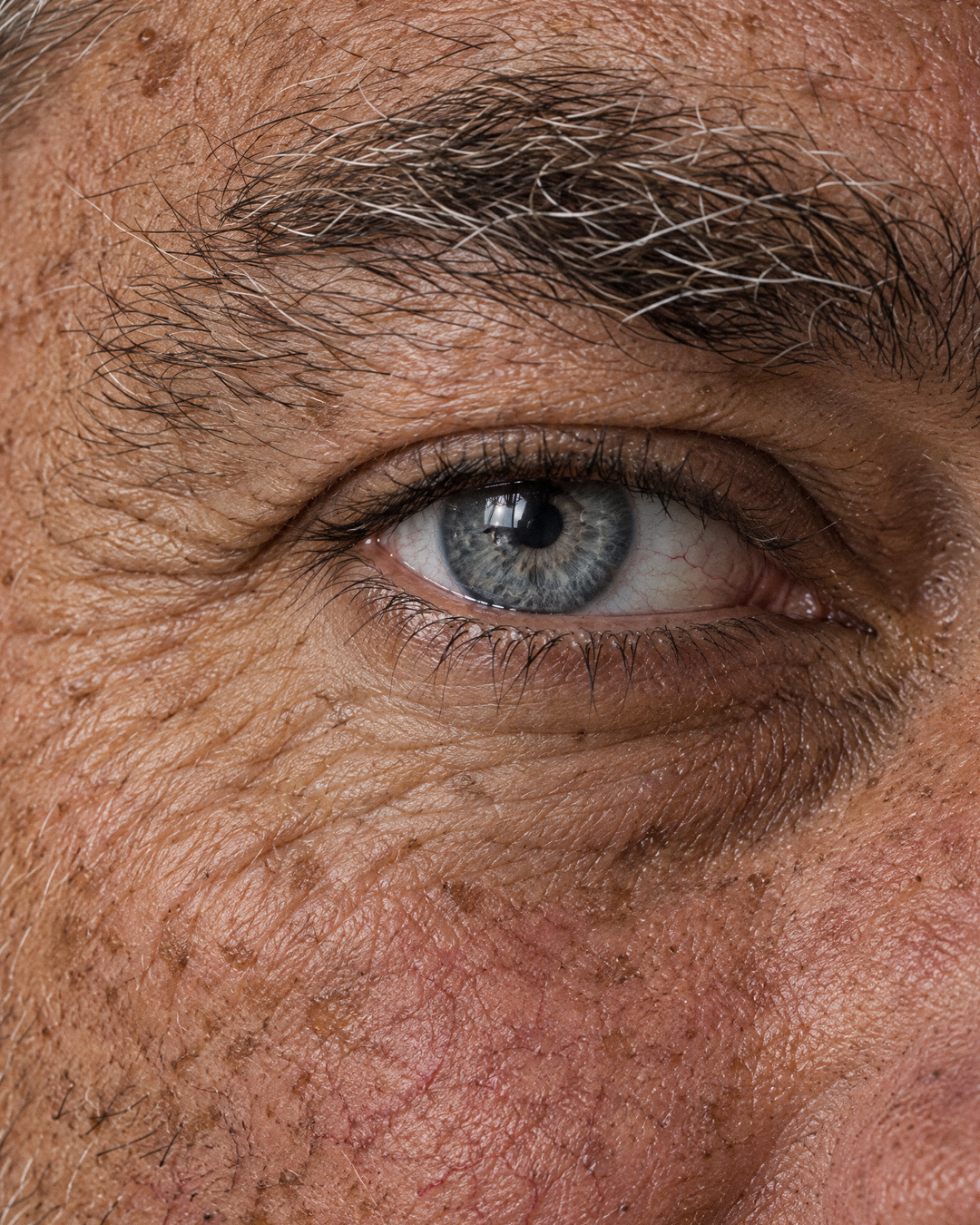
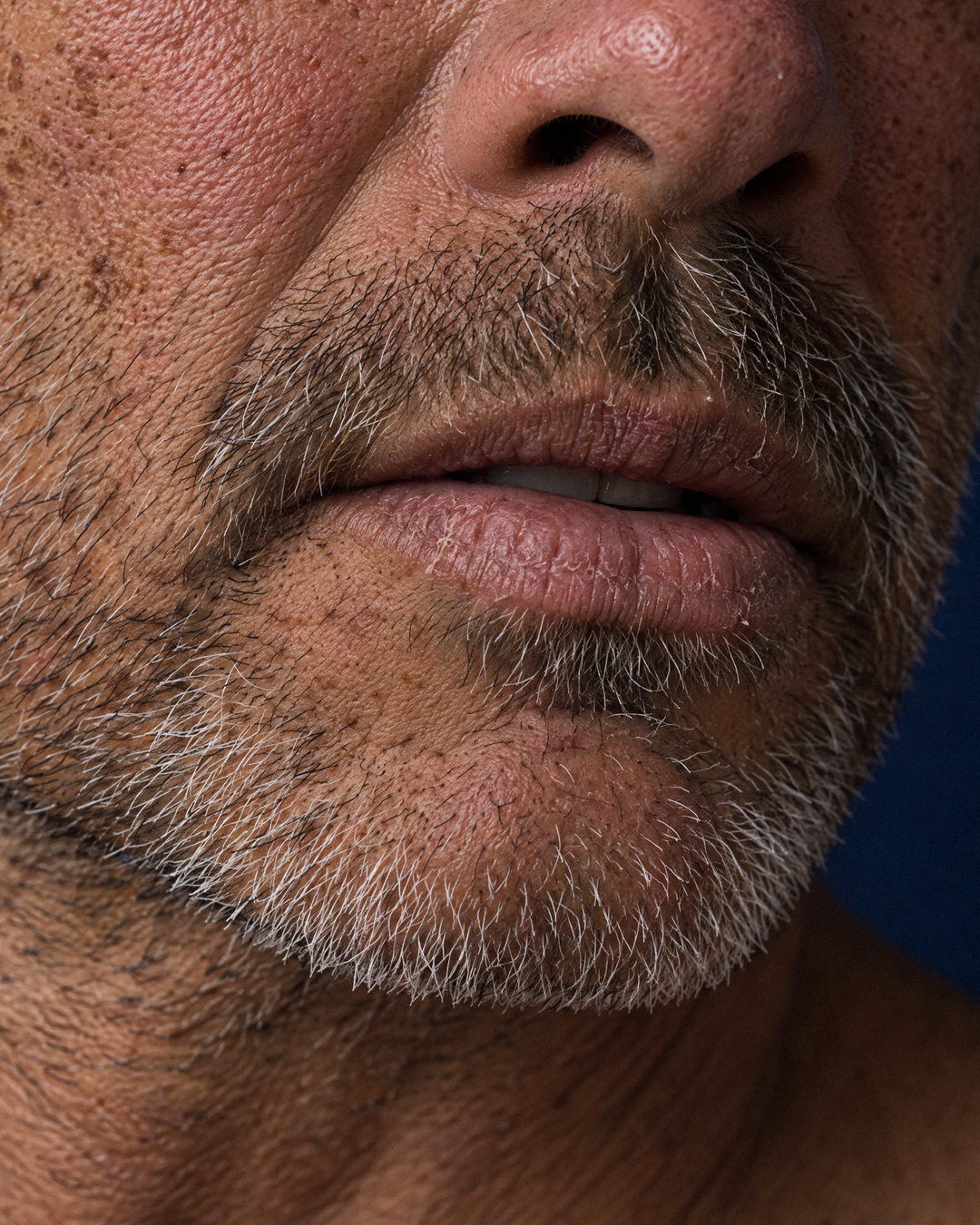
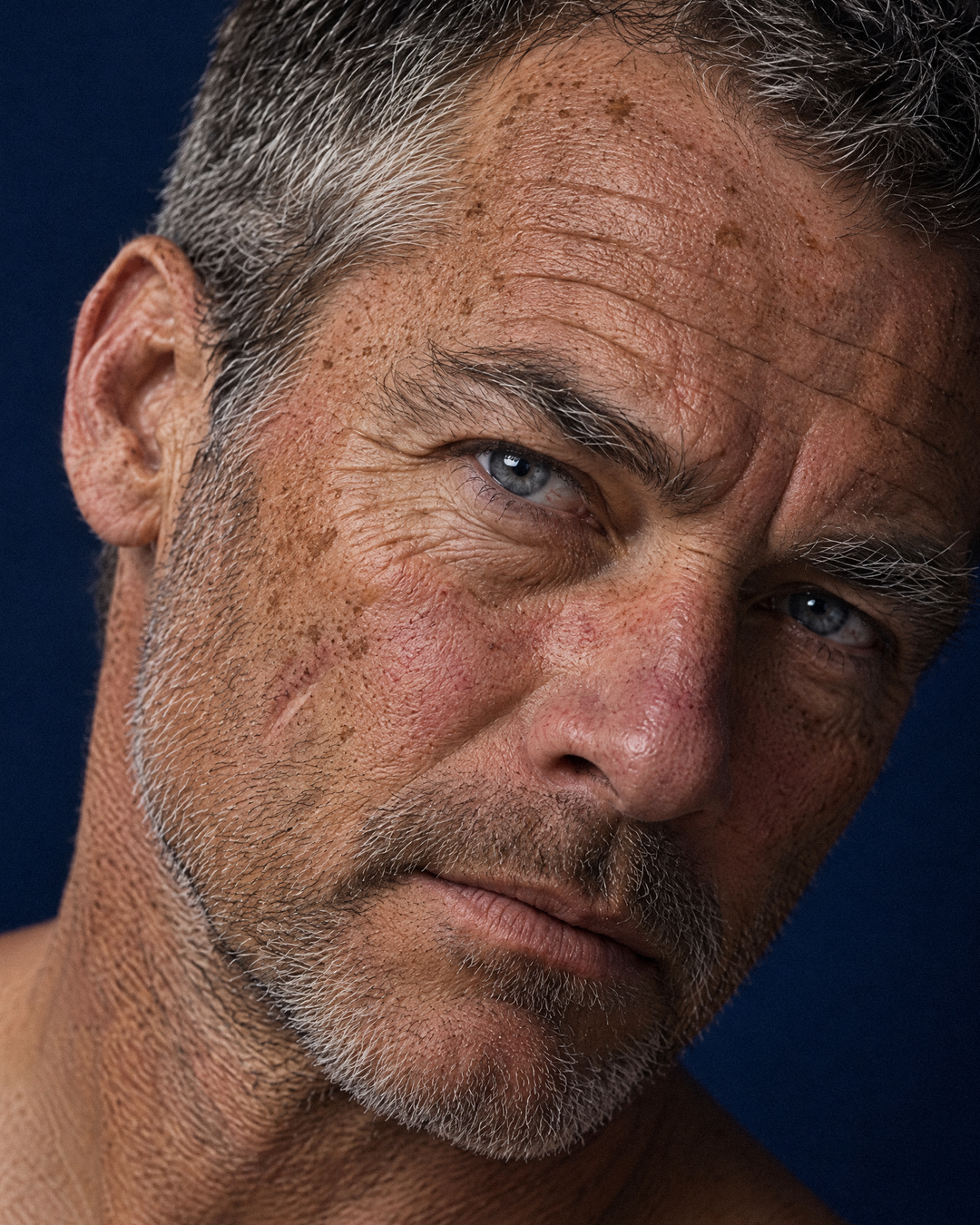
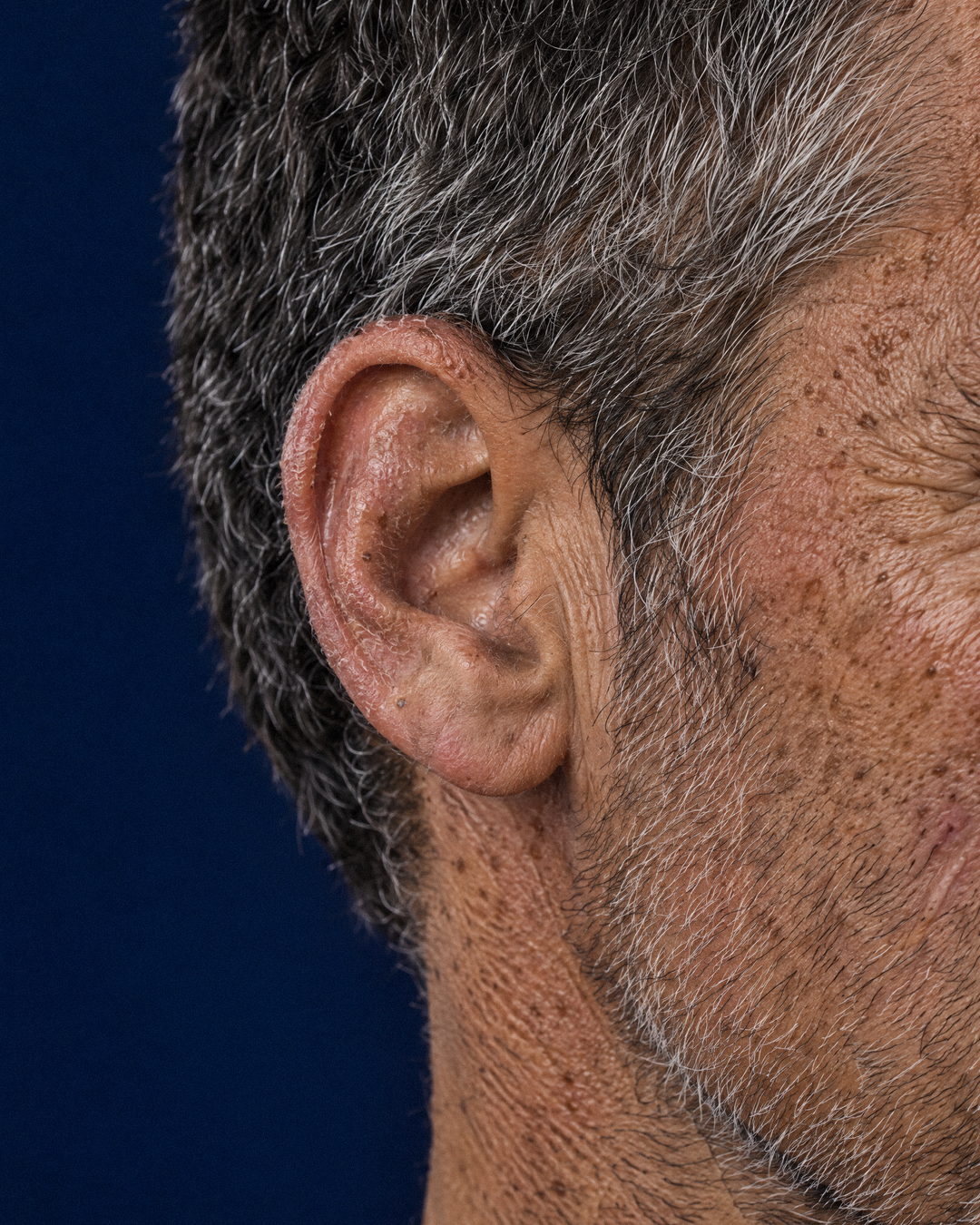
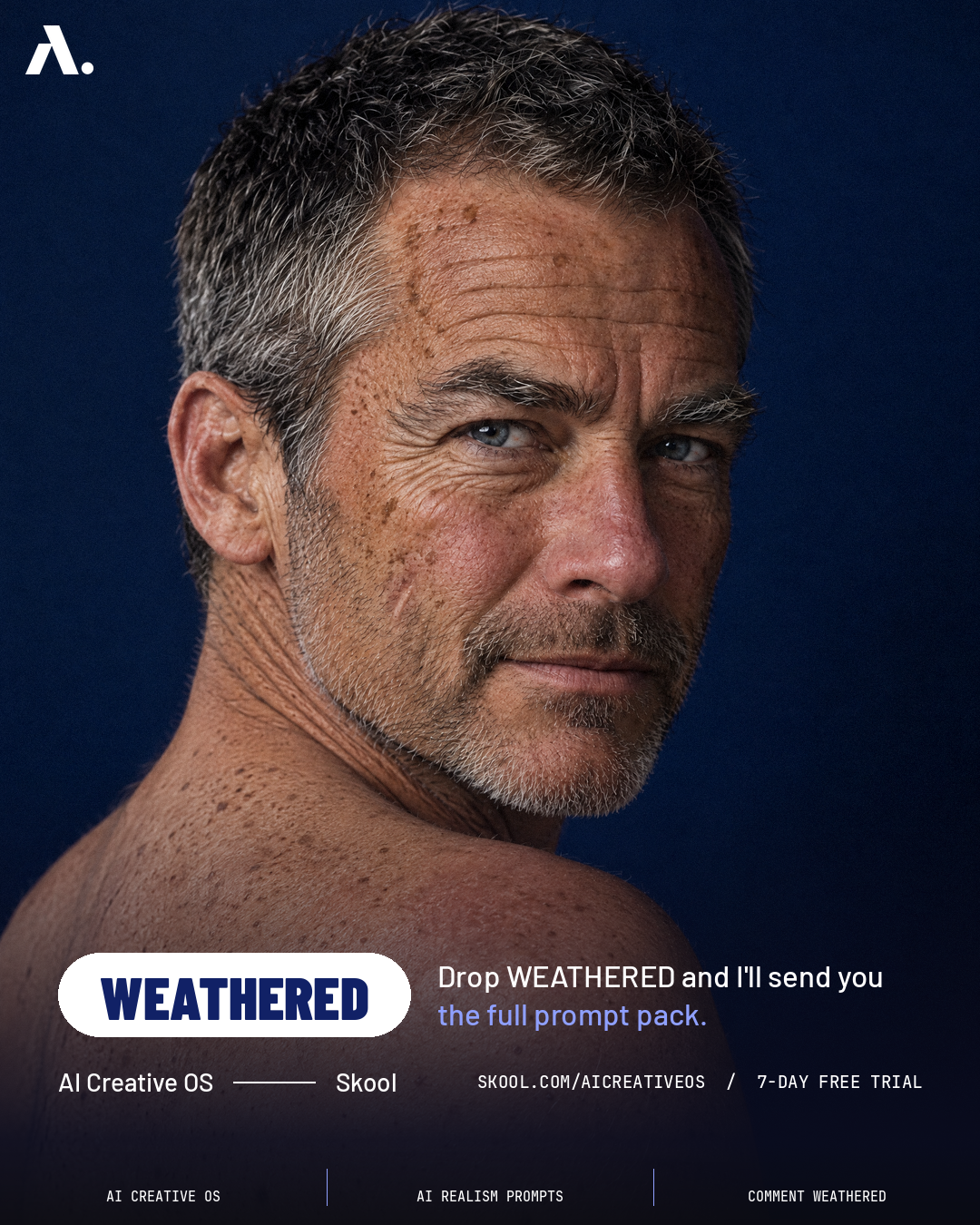
Make the hero, then make him the reference for everything else. The hero prompt writes the identity once: early 50s, fair, ruddy, sun-damaged skin, short salt-and-pepper hair, grey and brown five-day stubble, pale grey-blue eyes. For shots 02 to 08 I attached two images: the hero I kept as the first reference (who he is) and a framing shot as the second reference (how the crop and light should look).
Every prompt repeats a short version of the identity so he never drifts.
Every shot names the same room: deep navy seamless backdrop, one large softbox from camera left, natural falloff into shadow on the right. Every shot names the same camera: medium-format film, 100mm (macro for the close-ups), f/8.
Repeating the set in each prompt is what makes eight separate generations feel like one real shoot.

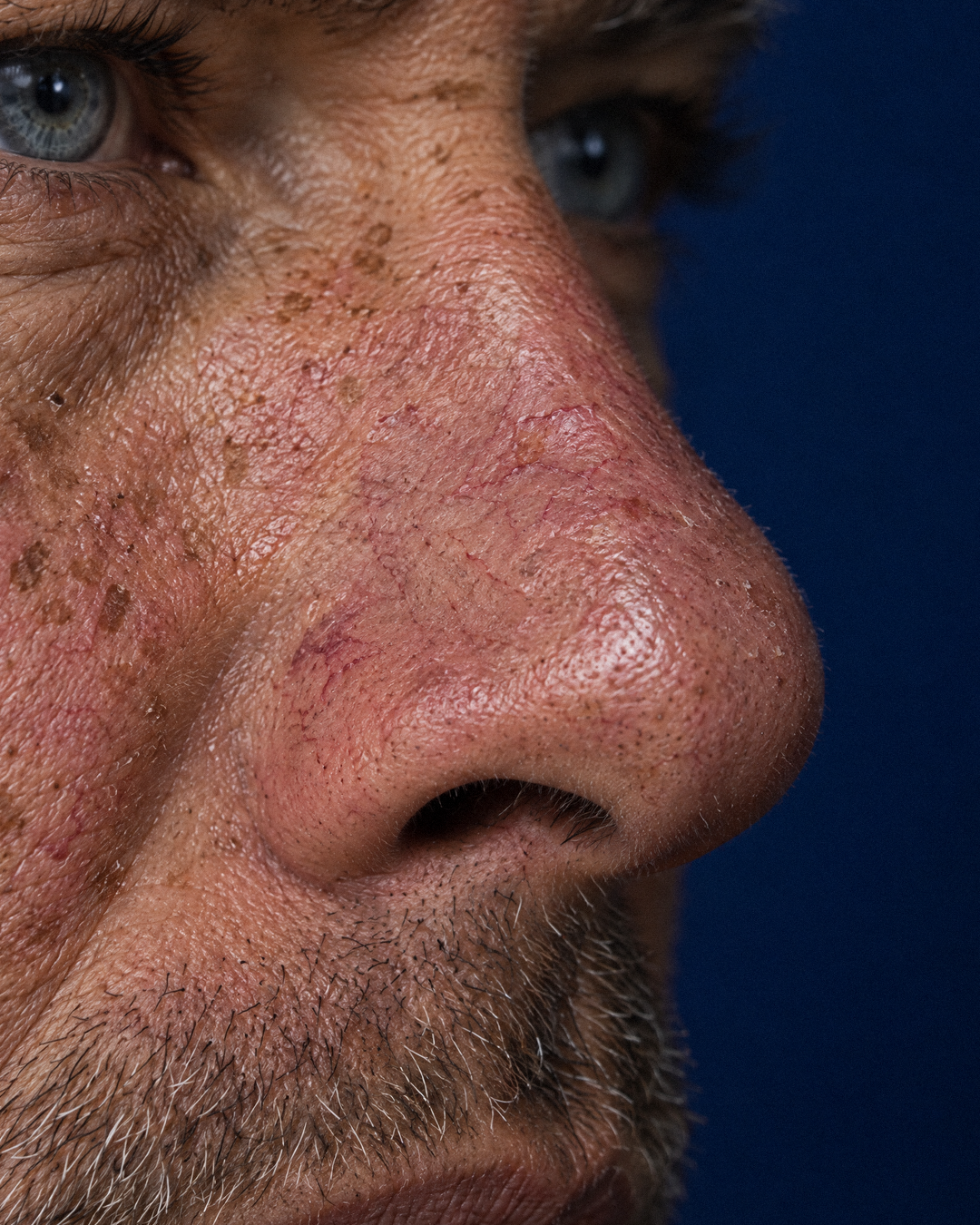
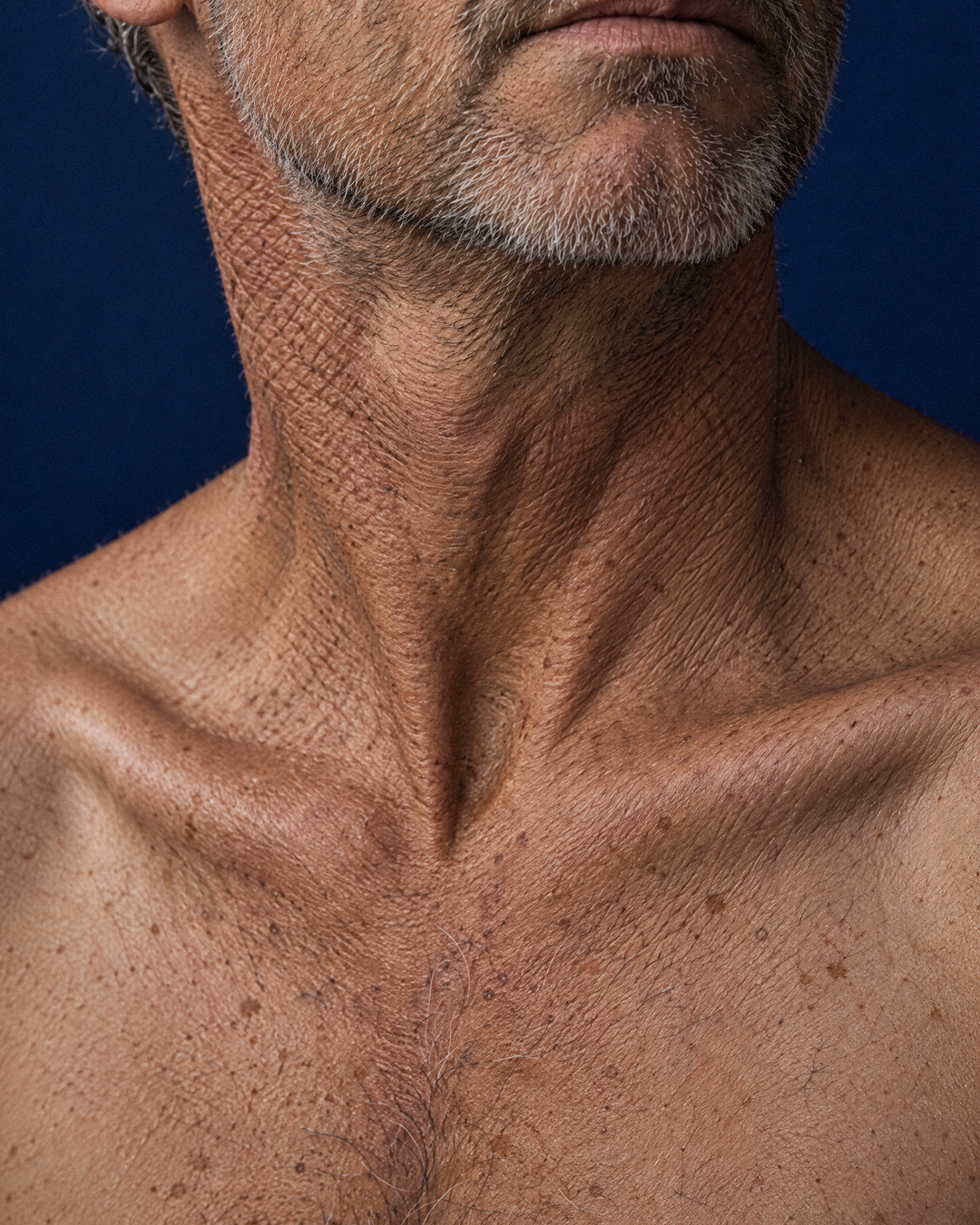
AI loves smooth, flawless faces. Sun damage only shows up when you ask for it by name: squint lines, deep forehead furrows, sun spots, broken capillaries, chapped and cracked lips, the criss-cross neck creases, a sunburnt ear rim, grey and brown stubble.
Each frame sells one or two of these. Vague words like rugged or handsome are exactly what pushes the model back to plastic.
Every prompt ends with the same refusal line: No beauty retouching, no smoothing, no HDR, no waxy or oily highlights, no plastic look, no CGI. Fine film grain. No text. Weathered skin is exactly what models want to smooth away, so the negatives do most of the work here.
Ask for dry, matte skin and allow a sheen only where real skin has one, like the tip of the nose.
Two image references per shot as described in step 01. I cropped the finals to 4:5 (1080 x 1350) for the carousel and put text only on the hero and the last slide.
QC zoomed in. Regenerate that one frame when:
Keep the rest.
The eight ready prompts are in the members pack below.

This guide is the full process. The ready-made version lives inside AI Creative OS on Skool, next to every other prompt pack I post.